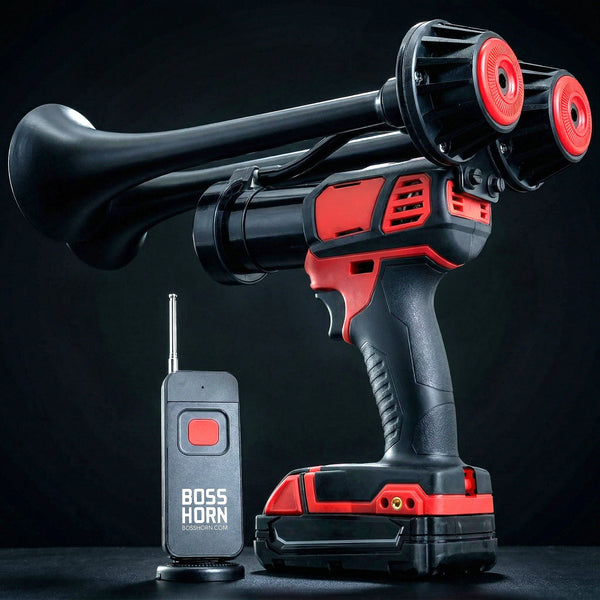
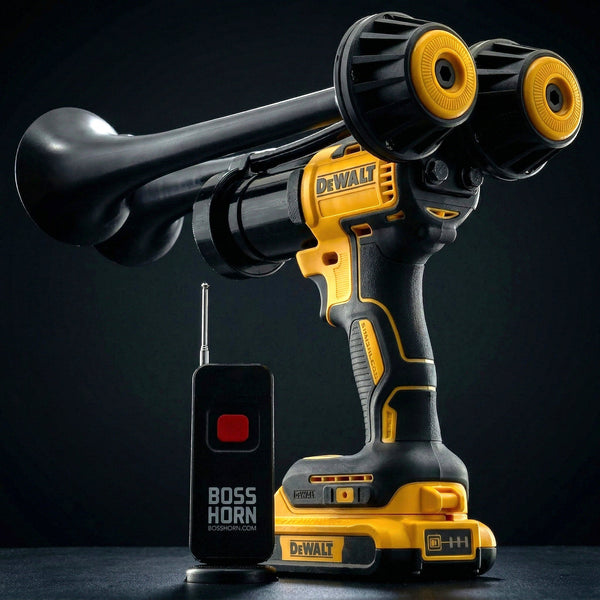
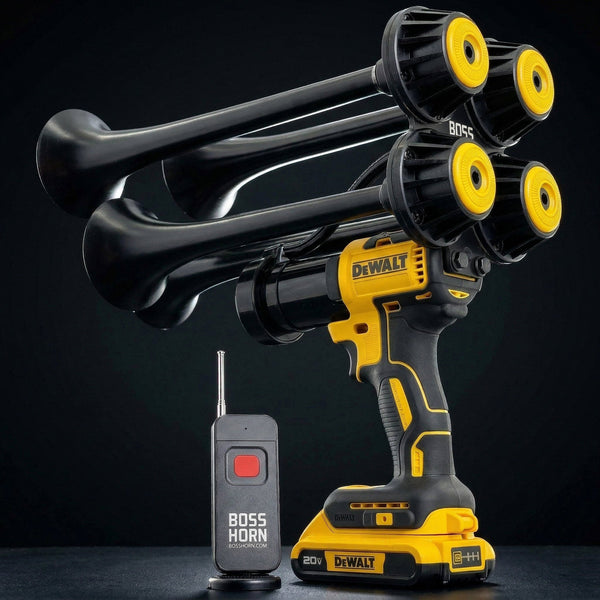
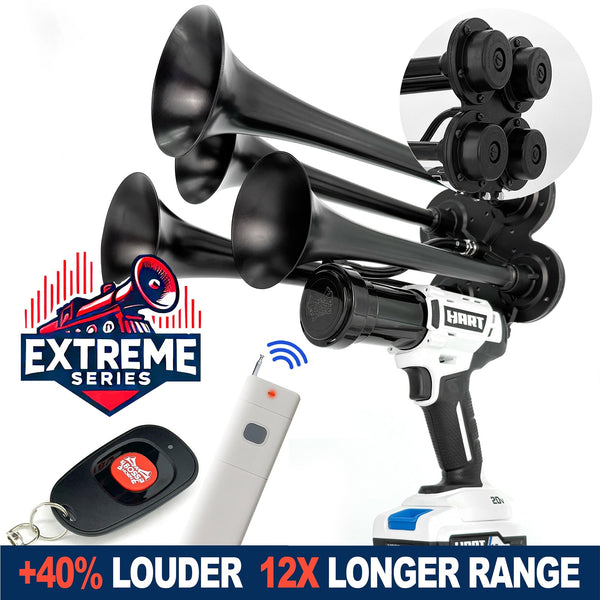
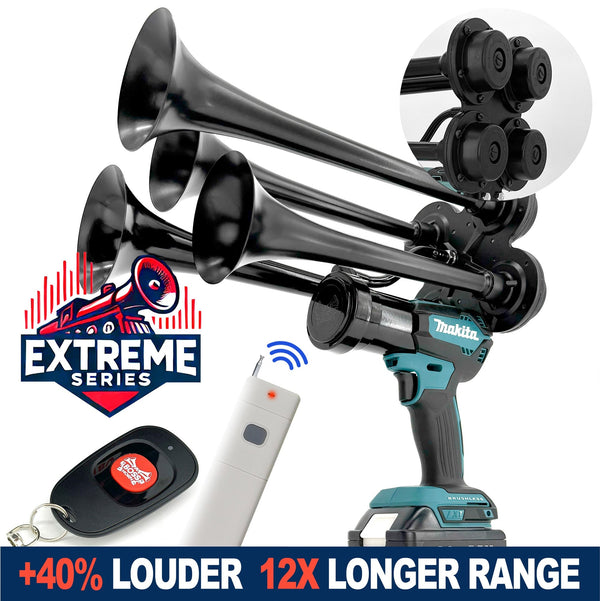
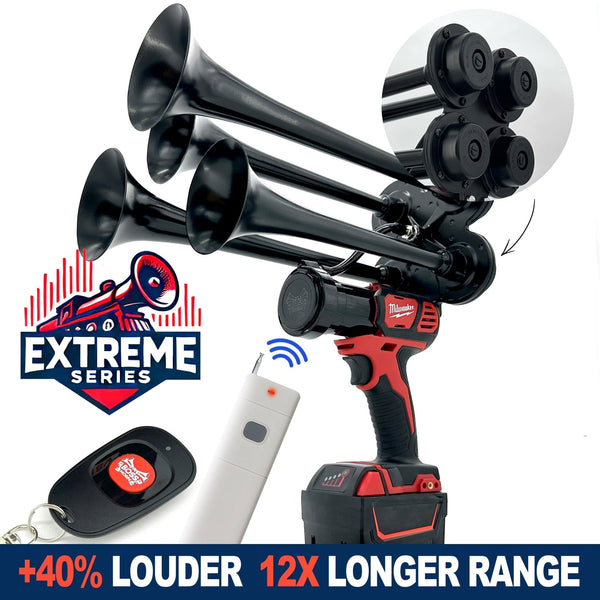
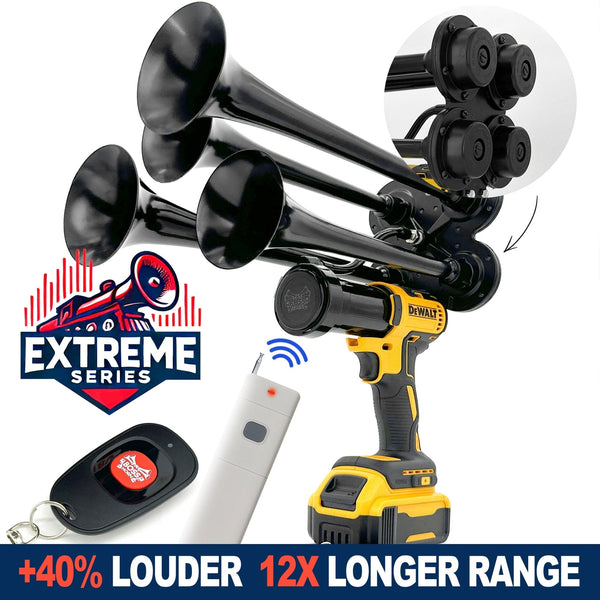
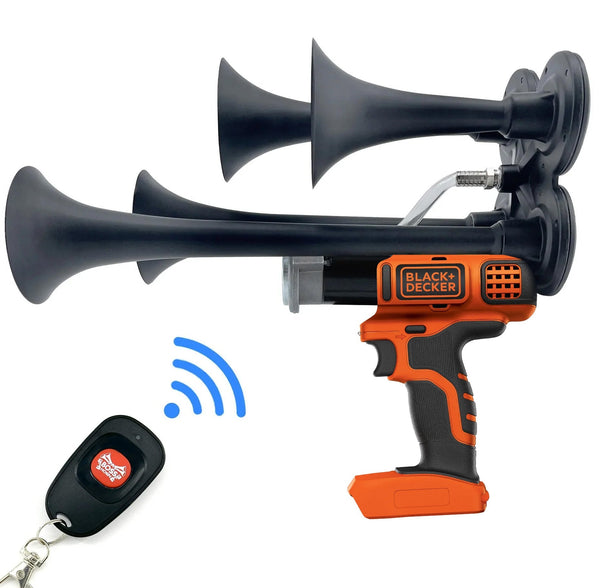
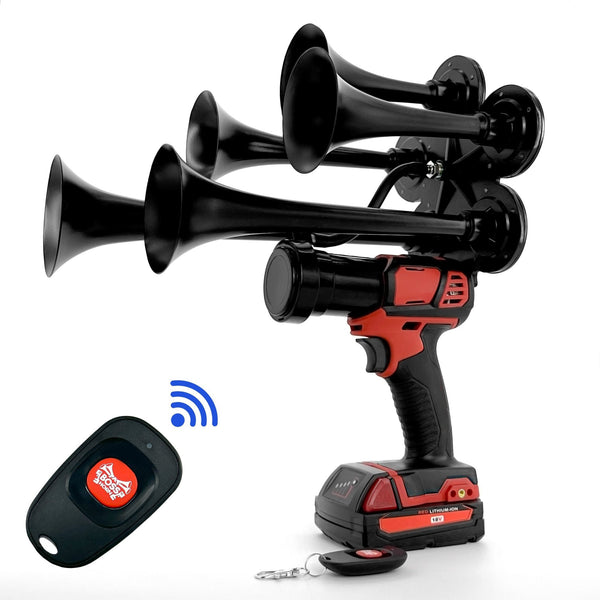
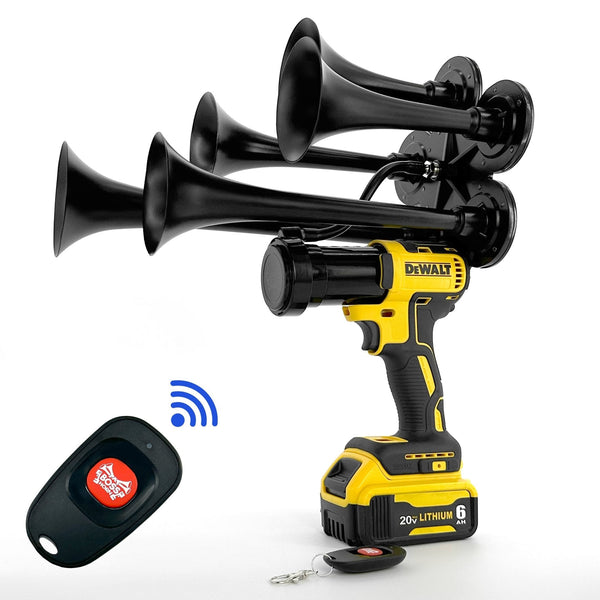
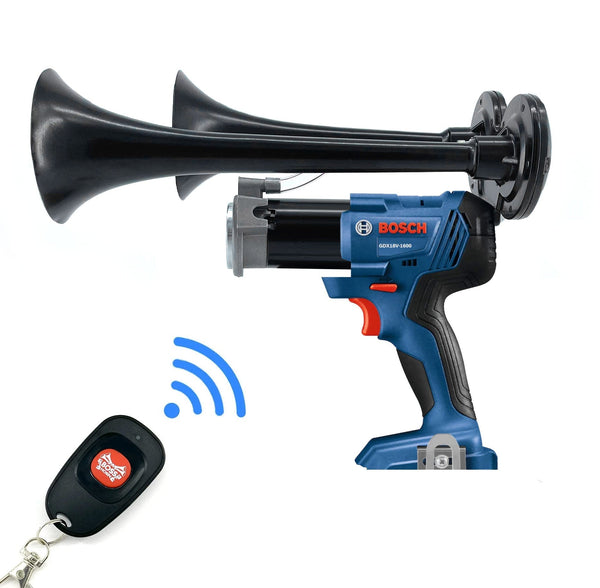
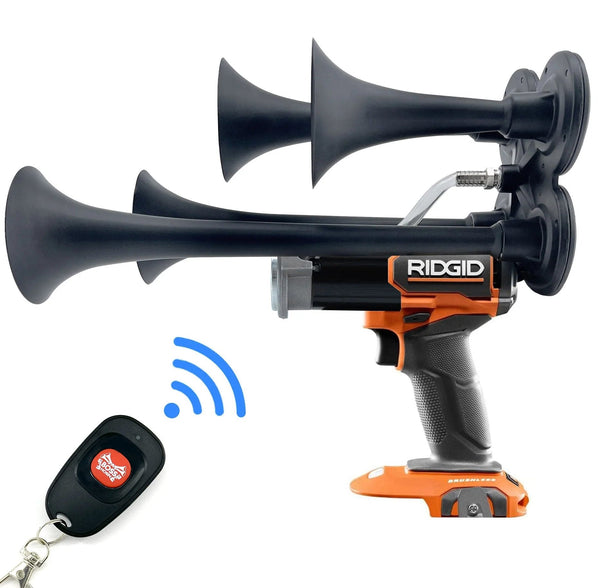
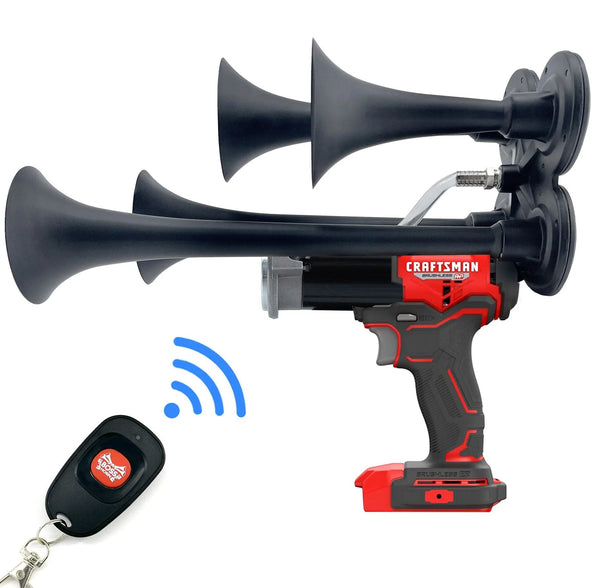
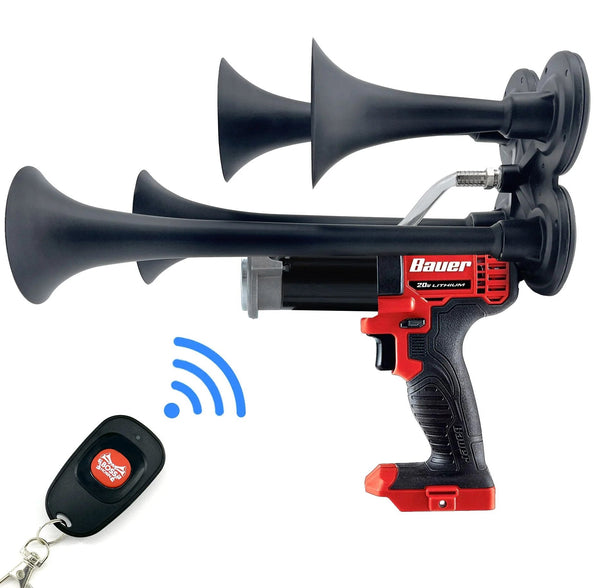
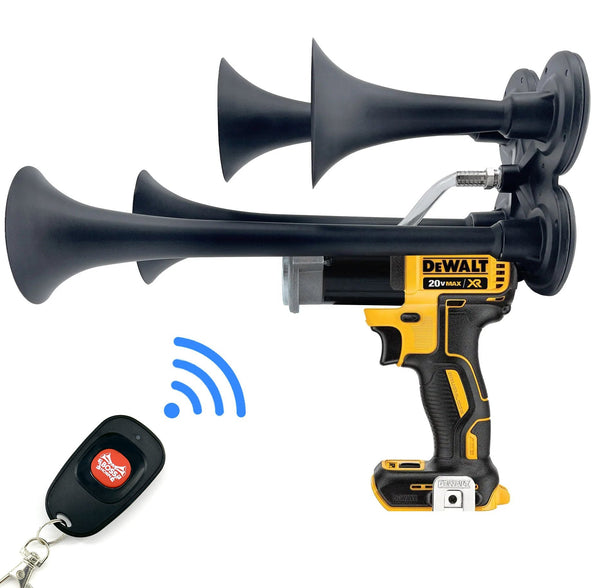
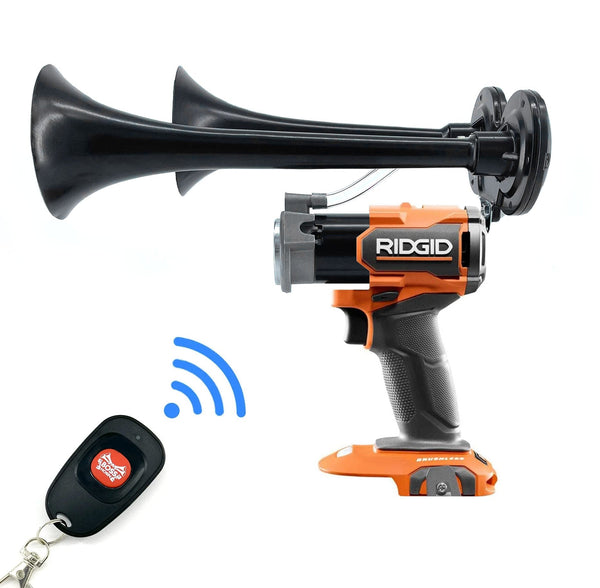
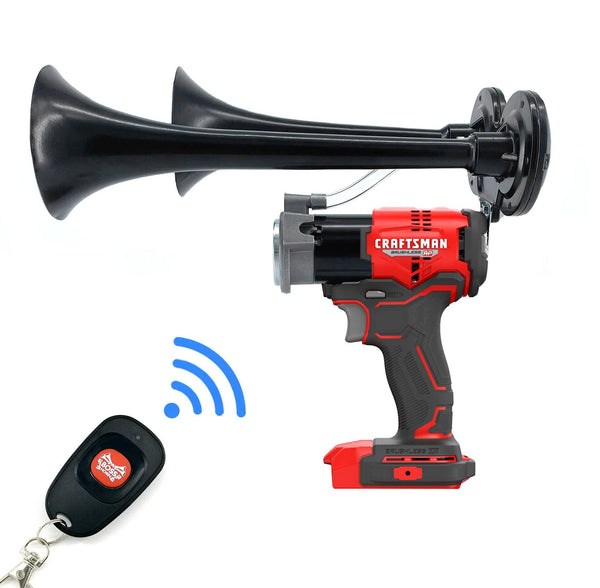
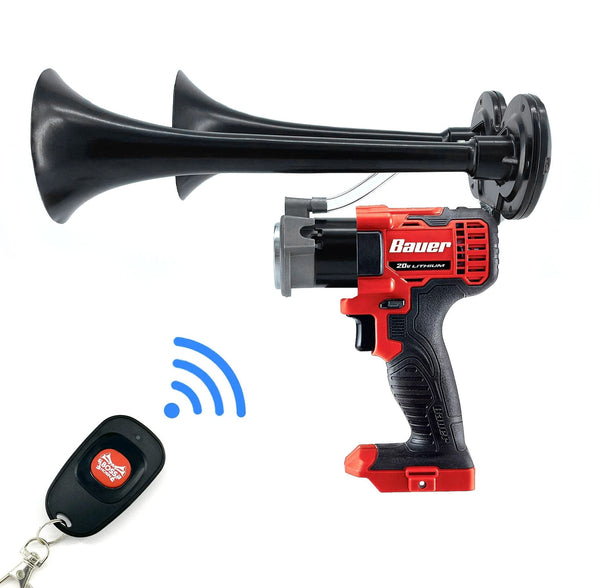
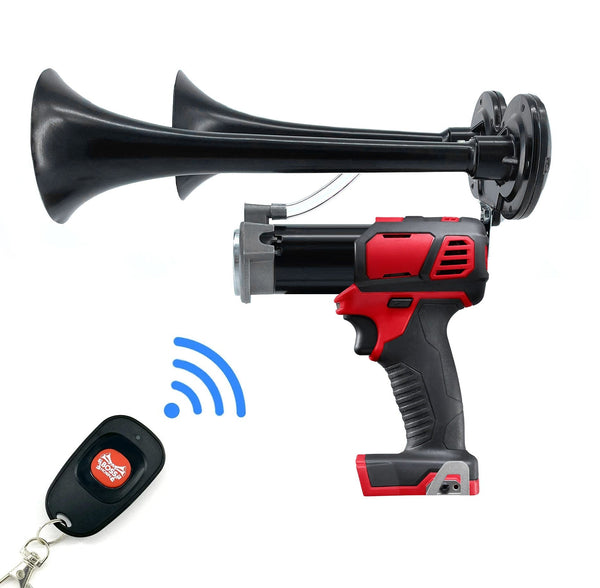
Why a portable train horn for marine & boat air horn use
Out on the water, a reliable sound-signaling device is not optional — it is a federal requirement for most powered vessels under USCG navigation rules. Traditional canned air horns run out of propellant at the worst possible moment, and hardwired electric horns tie you to a fixed mount and a boat's 12-volt system. A battery-powered train horn drill changes that equation entirely.
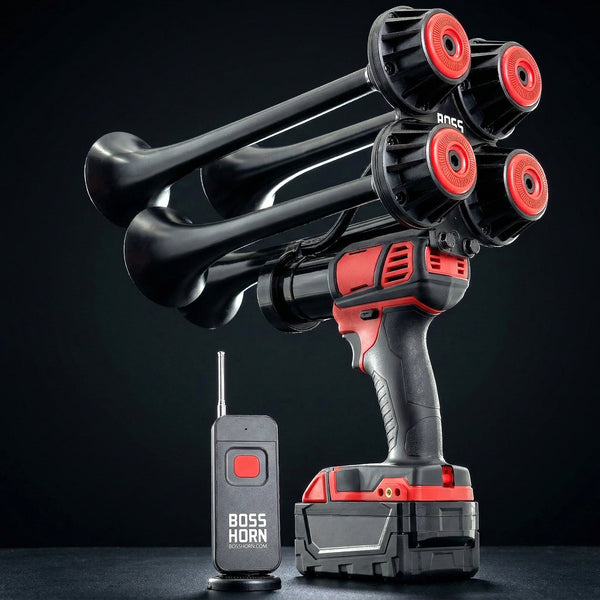
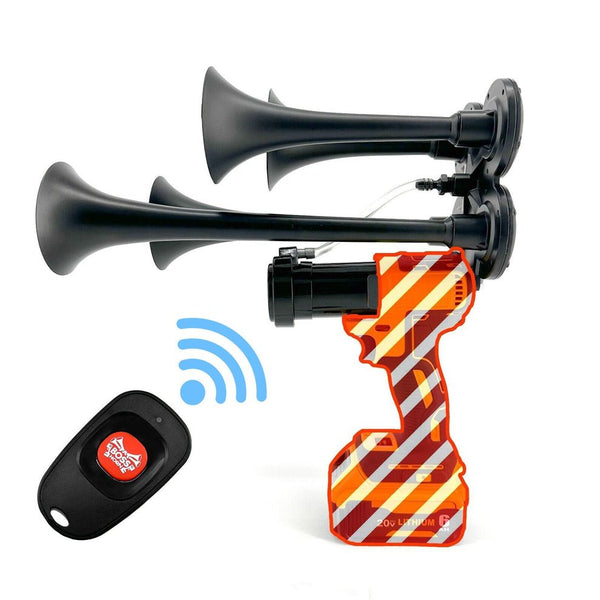
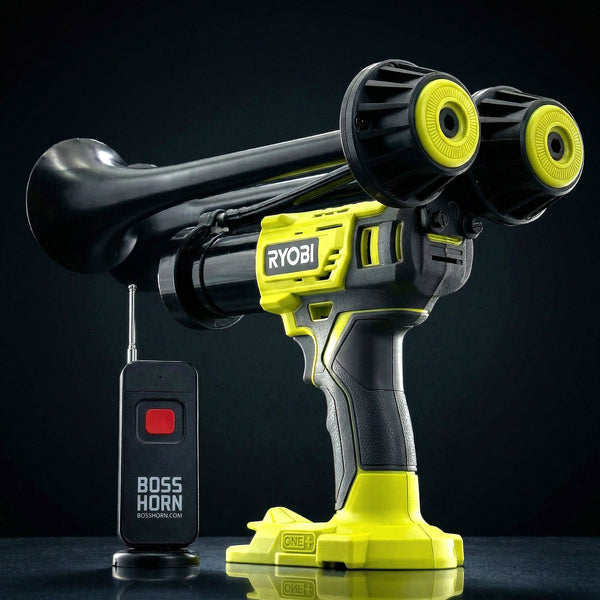
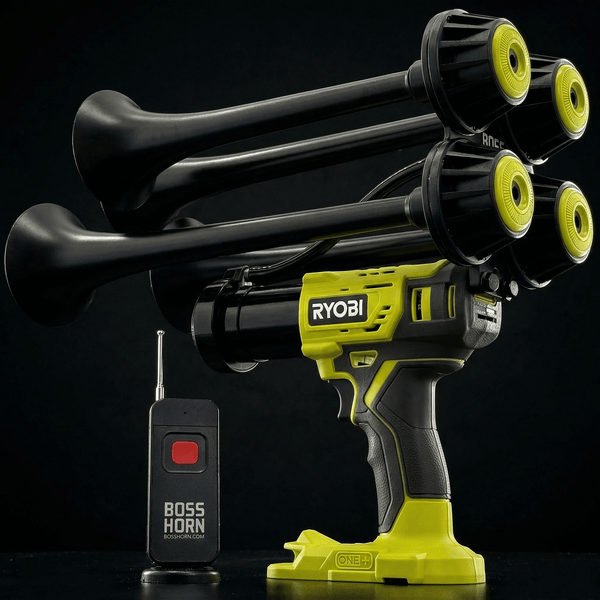
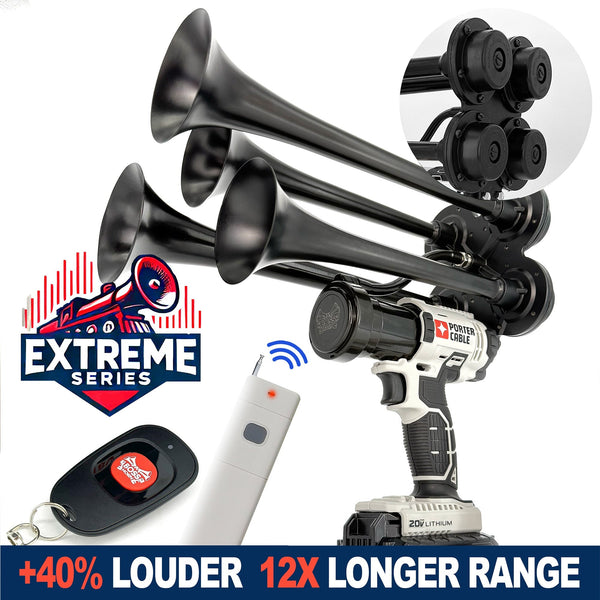
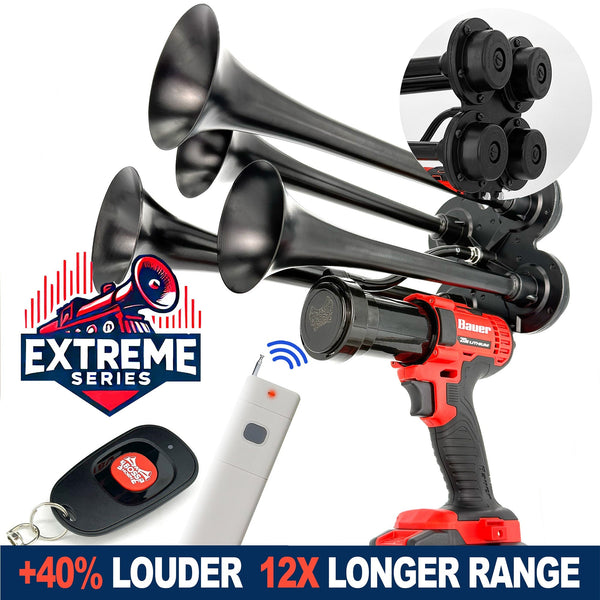
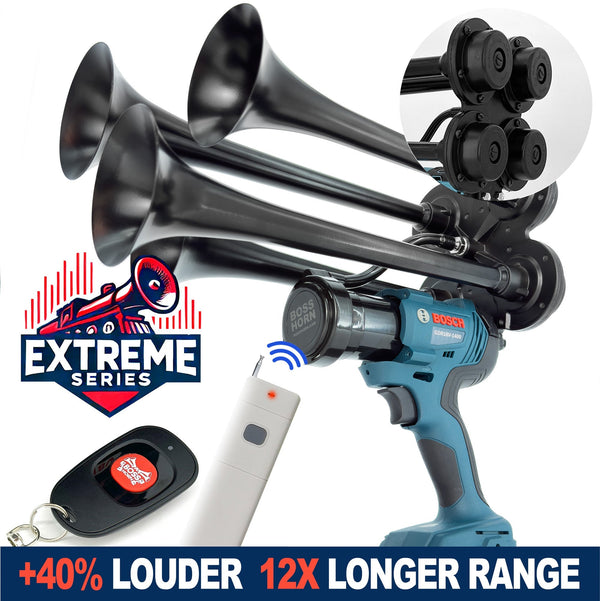
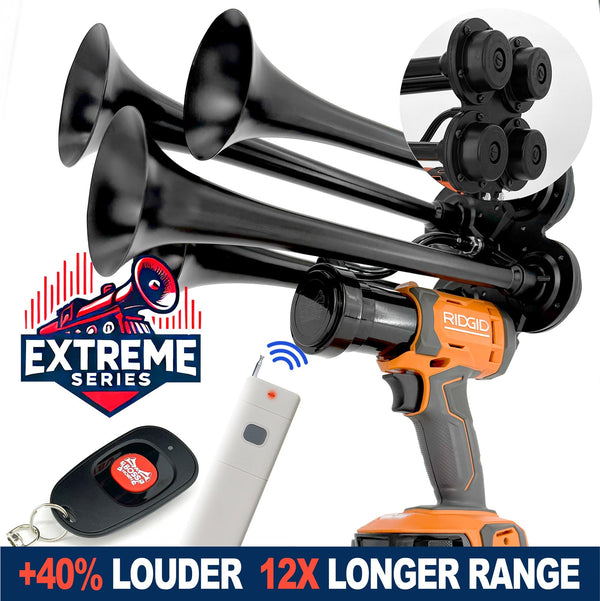
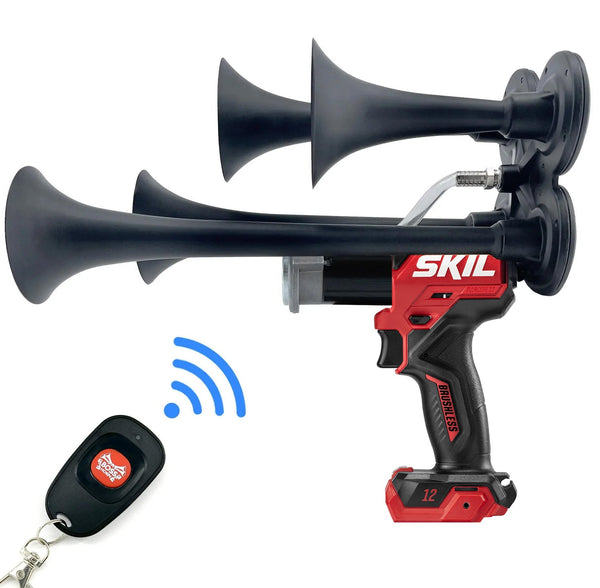
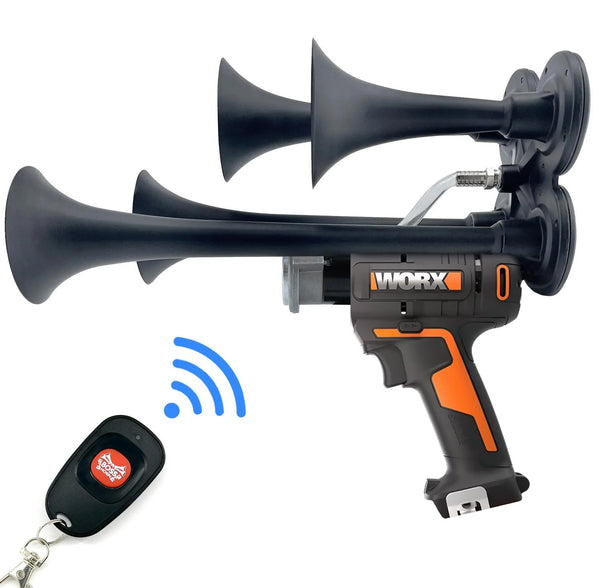
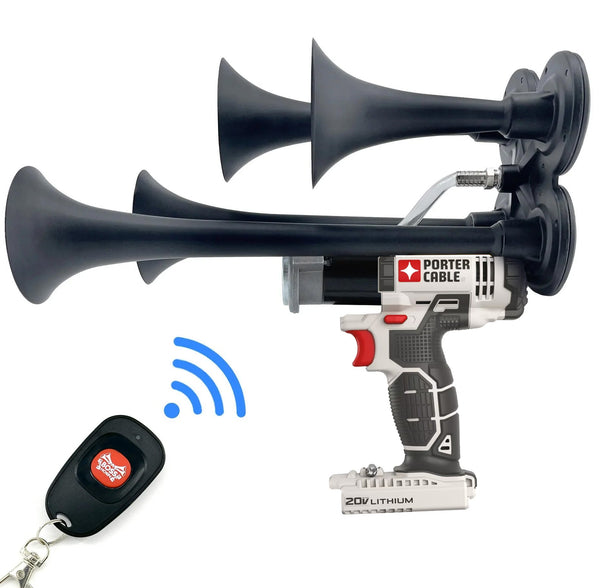
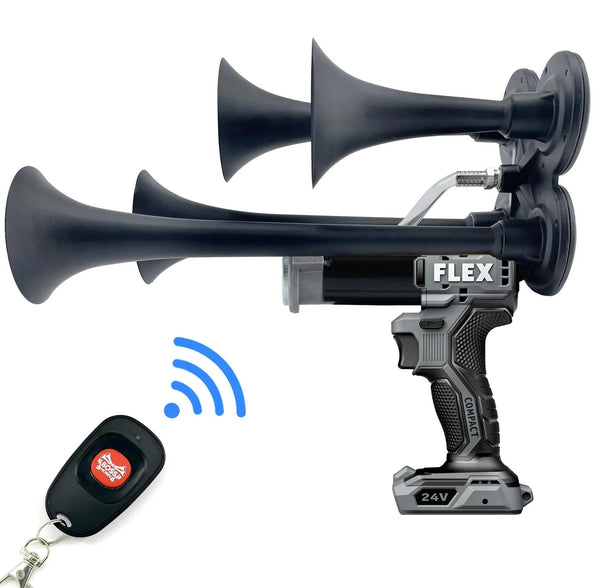
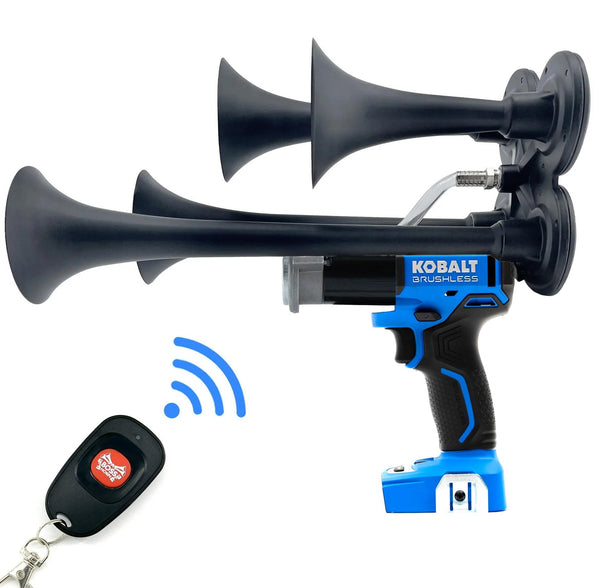
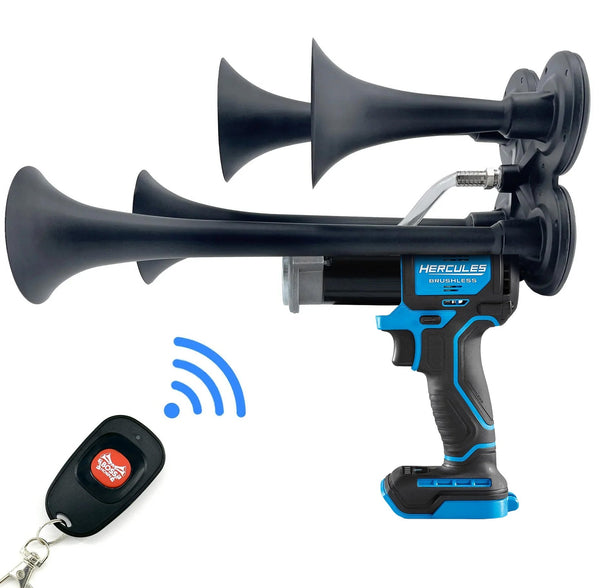
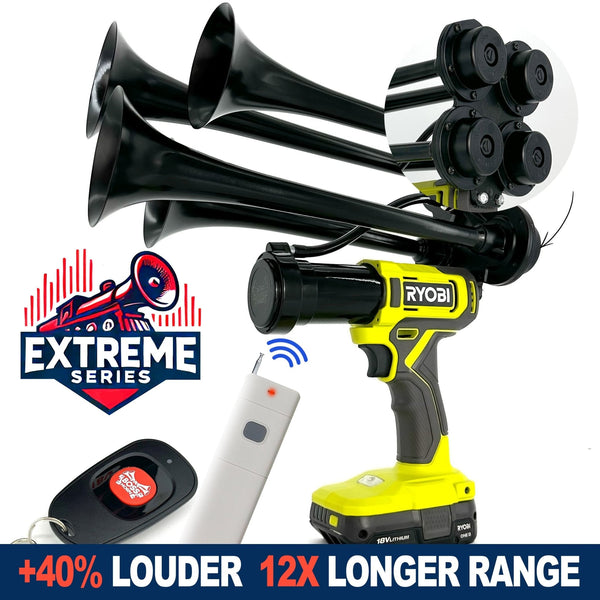
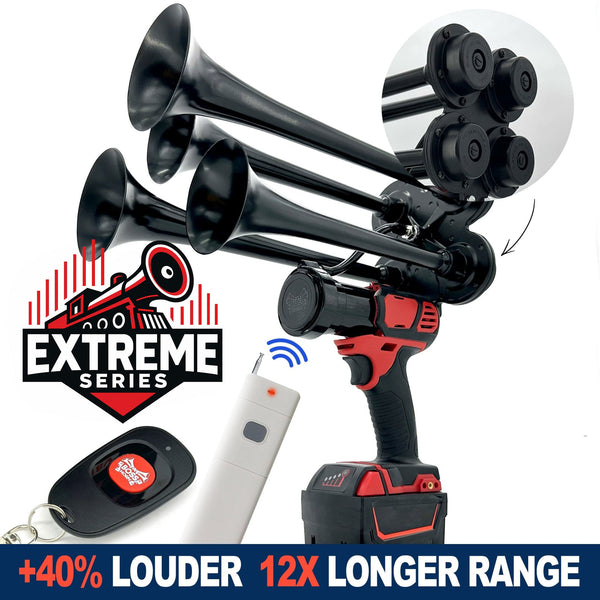
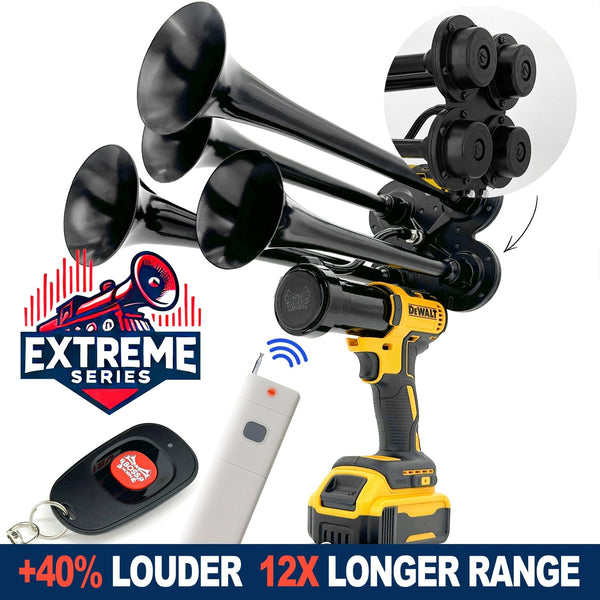
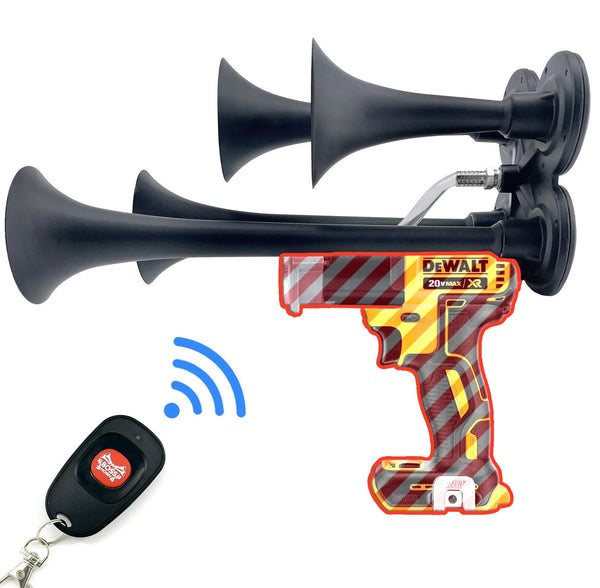
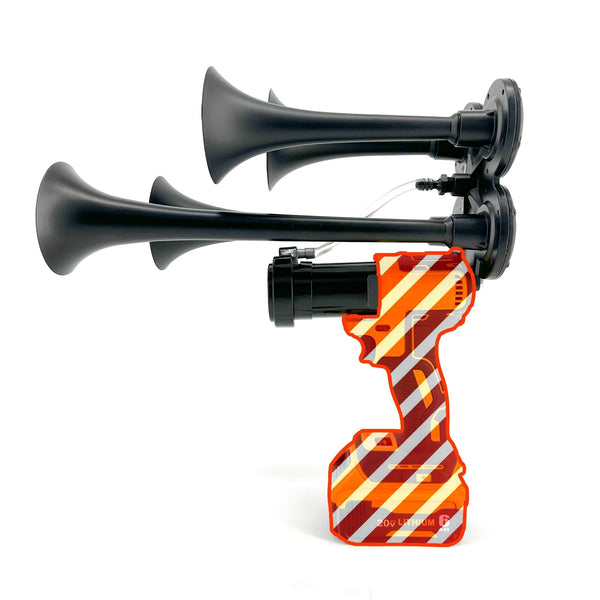
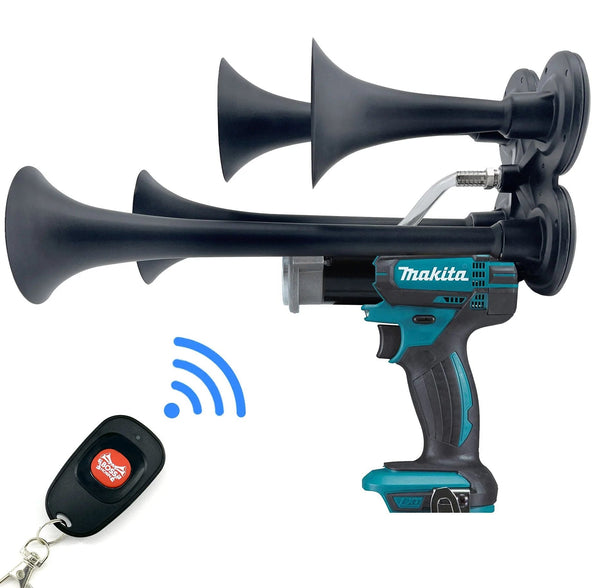
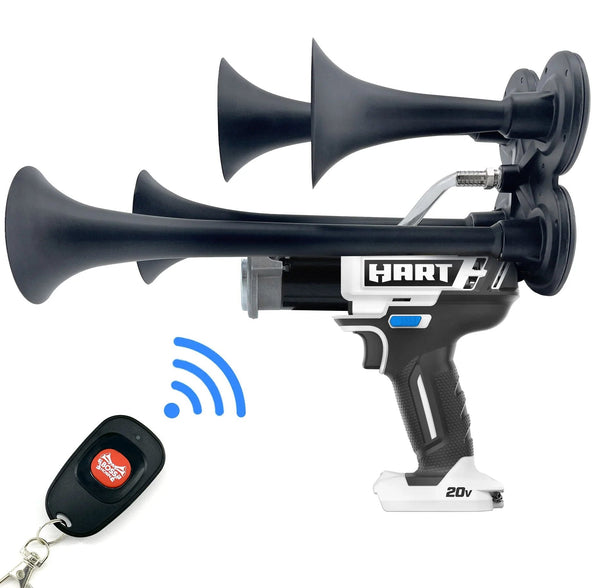
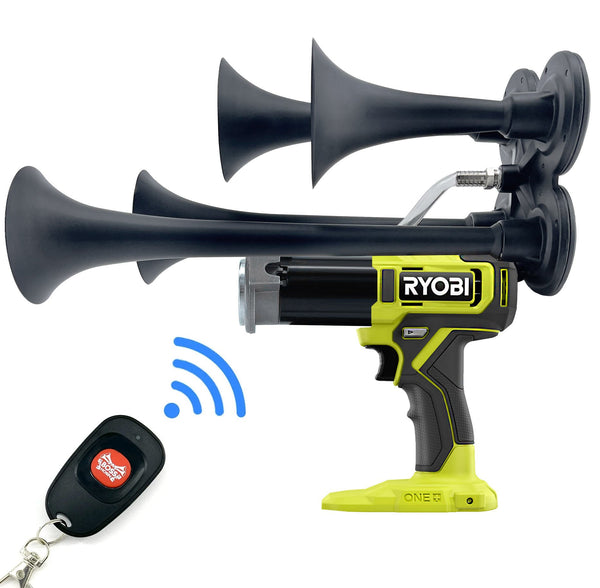
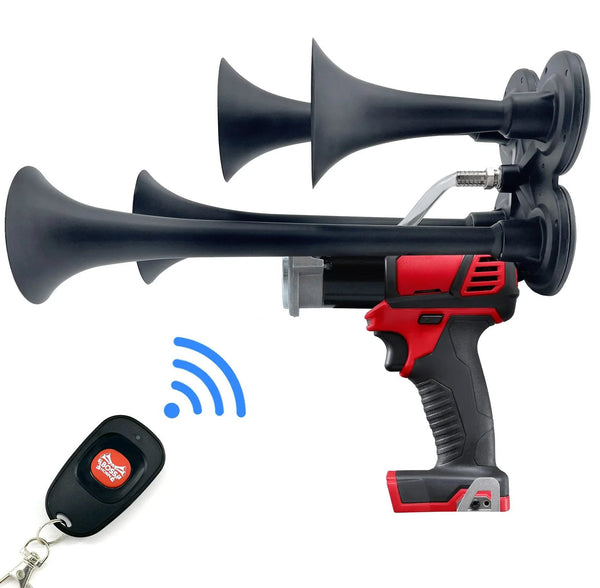
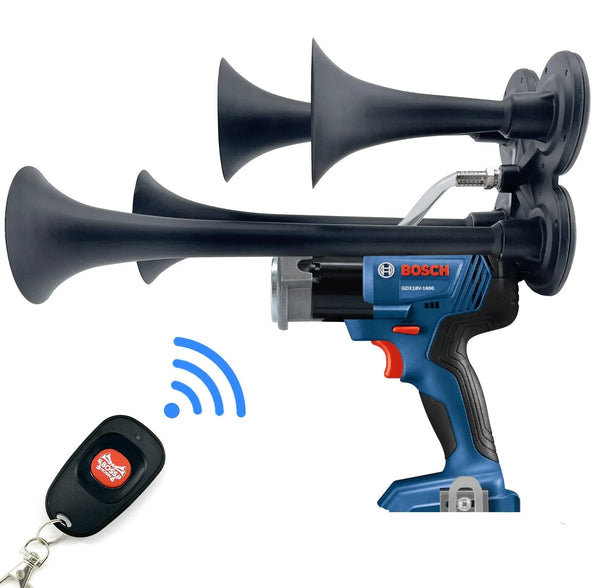
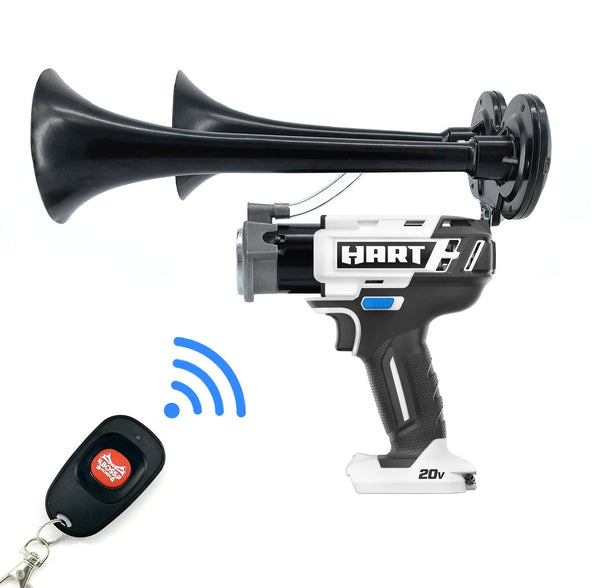
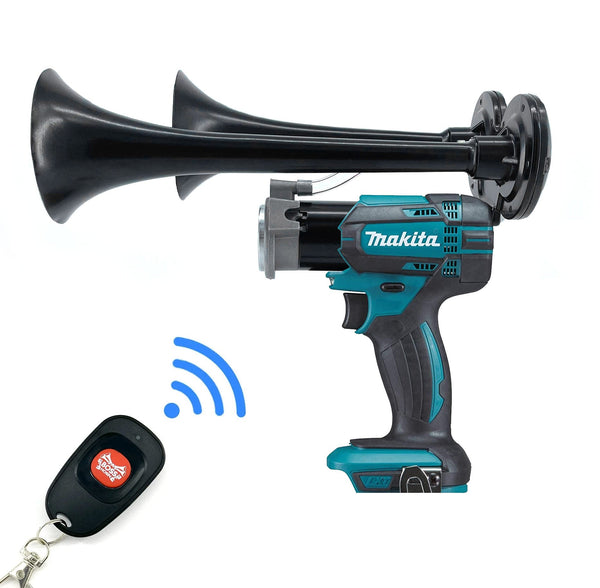
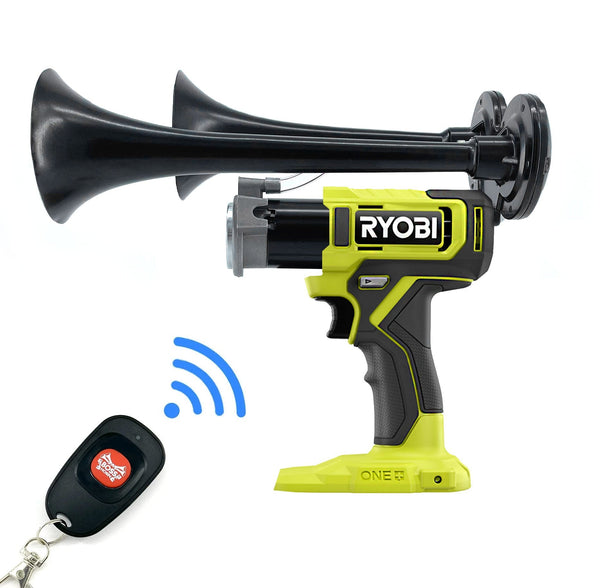
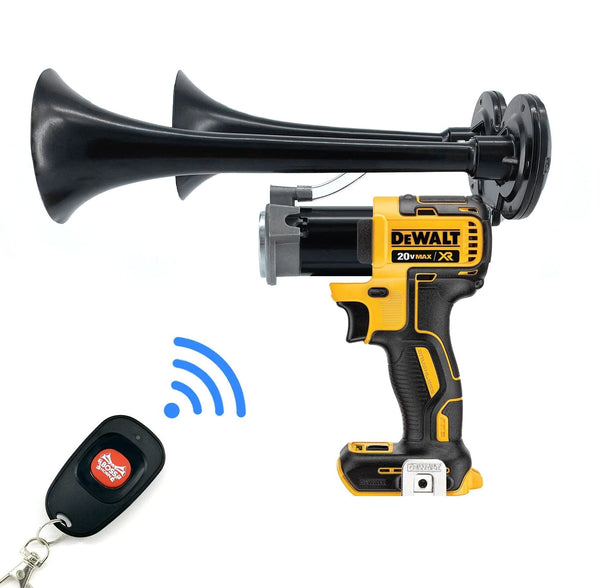
Built on an impact-driver chassis, a Train Horn Drill unit runs on the same battery pack you already carry for your cordless tools. Swap in a fresh pack and you have a full-power marine air horn ready to go — no propellant canisters, no wiring, no permanent install required. Take it from the powerboat to the fishing skiff to the kayak without buying a separate horn for each vessel. The handheld format means it stows in a gear bag, dry box, or under a seat until you need it. For splash-prone environments, pairing the unit with an Industrial Waterproof Remote lets you trigger the horn from up to 260 feet away while keeping the drill body somewhere drier. Whether you are signaling a fog warning, clearing a blind channel, or alerting a larger vessel of your position, a train horn drill delivers the kind of output that actually cuts through wind, wake noise, and engine rumble.
How to choose
-
Loudness tier: Open water, busy channels, and large powerboats call for the highest output you can get. Quad-trumpet and Extreme Series units produce more volume and throw farther than dual-trumpet configurations. Kayaks or small inflatables may be fine with a dual-trumpet, but err louder when safety is the purpose.
-
Weather and waterproofing: Marine environments are wet. Prioritize units rated for moisture exposure and always pair with the Industrial Waterproof Remote (rated for splash zones) if you plan to trigger remotely rather than handheld.
-
Remote range: A 260-foot wireless remote lets you mount or stow the horn body below the gunwale while you trigger it from the helm or cockpit — critical on larger boats where running to the horn is not realistic.
-
Mounting versus handheld: Handheld is the simplest starting point and works for kayaks, jet-skis, and small fishing boats. Powerboats and sailboats that want a fixed station benefit from a hard mount — use stainless steel hardware to resist saltwater corrosion.
-
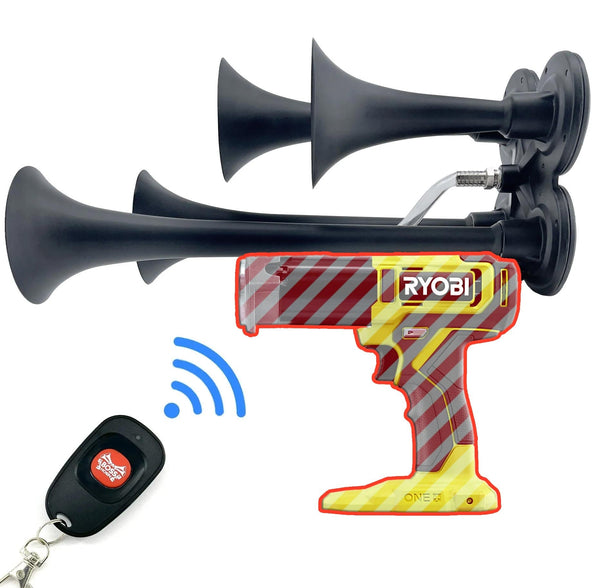
Battery platform you already own: The drill chassis is compatible with major 20V/18V battery platforms. Pick a unit that matches the battery system already on your boat or in your gear kit so one set of packs serves multiple tools.
Mounting & install tips
The simplest approach on any vessel is handheld — store the horn in a waterproof bag or dry box, pull it out when needed, and return it when done. This works especially well on kayaks, canoes, and jet-skis where permanent hardware is impractical and weight matters.
For powerboats and sailboats where you want a fixed station, choose a location that is sheltered from direct spray when possible — under a helm overhang, inside a console, or beneath a hardtop. Run the Industrial Waterproof Remote receiver near that location and keep the transmitter at the helm. That way the horn body stays drier and you trigger it without leaving your station.
When hard-mounting to any marine surface, use stainless steel mounting hardware exclusively. Standard zinc or cadmium-plated fasteners corrode quickly in saltwater environments and will fail. Stainless bolts, lock washers, and backing plates spread the load and resist rust. For fiberglass hulls and consoles, drill pilot holes carefully and seal the penetration with marine-grade sealant before fitting the mount to prevent water ingress into the laminate.
On fishing boats, a popular setup is a rail-clamp mount on the bow or gunwale rail using stainless rail hardware, giving you a dedicated forward-facing position for fog signaling without permanent modification to the boat's surface. Whatever mount path you choose, confirm the horn faces outward and is not blocked by canvas, a windshield, or gear that would muffle the output.
Legal & safety notes
Sound-signaling devices are a USCG requirement, not a suggestion. Verify your setup meets the rules that apply to your specific vessel before heading out.
- USCG navigation rules (Rules of the Road) require an audible sound-signaling device on most powered vessels; vessels 39.4 feet and under have specific audibility requirements that a 100+ dB horn is designed to meet, but exact requirements vary by vessel class and length.
- Operating a horn in a manner that is unnecessarily loud or in restricted areas may violate local noise ordinances — know the rules for your waterway.
- Always test your horn and battery charge before departure; a dead battery on the water is a safety hazard.
Consult the USCG and your state's boating authority for requirements specific to your vessel class — we do not provide legal advice.
Frequently asked questions
Does a train horn drill actually qualify as a marine sound-signaling device?
A horn that meets the audibility requirements set by USCG navigation rules — generally 100 dB or greater at the required distance for your vessel class — can fulfill the sound-signaling requirement. Whether a specific unit qualifies for your specific vessel class is something you need to confirm with USCG guidance or your state boating authority before relying on it as your sole signaling device.
Will saltwater air and spray damage the unit?
Marine environments are hard on any equipment. Use a unit with moisture-resistant construction, store it in a dry box when not in use, and rinse with fresh water after use in saltwater environments. The Industrial Waterproof Remote is rated for splash exposure and is the recommended trigger method in wet conditions.
How long does a battery charge last?
Runtime depends on battery capacity (Ah rating) and how frequently you sound the horn. A single outing's worth of required signals — fog warnings, channel crossings, departure signals — draws far less from a battery than continuous use. Carry a spare charged pack the same way you carry a spare propellant canister with a traditional horn.
Can I use this on a kayak or canoe?
Yes. Handheld use is the most practical approach for paddle craft. Stow it in a dry bag or deck bag, access it when needed, and return it. A kayak does not need a permanent mount, and the portability of the drill format is exactly suited to light watercraft use.
What is the wireless remote range, and does water affect it?
The Industrial Waterproof Remote is rated to 260 feet. Open-water environments with minimal obstructions generally favor reliable remote performance. Metal hulls, consoles, and electronics-heavy helm areas can reduce effective range — test the remote on your specific vessel before depending on it at full range.
Do I need stainless hardware if I hard-mount on a freshwater lake boat?
Stainless steel hardware is strongly recommended regardless of whether you boat in fresh or salt water. Freshwater boats still live in wet, humid conditions; standard hardware will rust and may seize or fail over a single season. Stainless fasteners cost little more and last significantly longer in any marine environment.
Can one unit serve multiple boats?
Yes — that is one of the primary advantages of the drill format. Because there is no permanent wiring or fixed install, you move the horn from vessel to vessel as needed. As long as the battery platform is compatible across your boats' tool kits, one unit covers your whole fleet.
Browse related
For marine use, we recommend prioritizing higher-output configurations and waterproof-compatible accessories. Explore the collections most relevant to on-water signaling below.